Understanding and Treating Hypertension
Hypertension is not a disease, it’s a response. Hypertension is a dysregulated vascular response with an exaggerated adverse response from insults to the blood vessel. The insults are biomechanical, biochemical, aging, metabolic, microbial, environmental, and nutritional. Although there are infinite insults, there are four primary responses. Oxidative stress, inflammation, decreased nitric oxide production, vasoconstriction, endothelial dysfunction, and immune dysfunction.
Hypertension, the number one modifiable risk factor for the development of cardiovascular disease, often gets less attention than other risk factors. In the United States, about 78 million (one of every three) people have high blood pressure or hypertension. Another one of the three will have prehypertension. That puts over 150 million Americans at risk for heart disease. hypertension puts individuals at risk of heart attack, arterial disease, stroke, retinal damage, kidney failure, erectile dysfunction, and poor circulation to the legs (especially the feet).
Think of hypertension as a disease of the blood vessel not a disease by itself. Hypertension is part of vascular disease and vascular aging. It demonstrates vascular dysfunction. The best approach to improve and manage hypertension is to improve vascular health, vascular biological function, vascular structure and slow vascular aging.
Air pollution induces inflammation, oxidative stress, stiffens arteries and negatively affects arterial structure. It also affects heart rate heart rate variability, vascular tone, blood clotting, atherosclerosis and increases risk of sudden cardiac death. Blood vessels react quickly to air pollution.
Losing fat: one of the most effective means to reduce BP – observational and
Clinical trials show positive direct relationship is to lose weight and that means fat and muscle.
Visceral fat (VF) obesity is the most important = body fat reduction is more important than weight reduction.
Additive to other treatments.
Getting lean is more effective in BP reduction when combined with exercise.
Blood pressure classification system
Normal BP is 120/80 mmHg but risk for CVD starts at 110/70 mm Hg.
Both systolic blood pressure (SBP) and diastolic blood pressure (DBP) are a continuum of risk for each mm Hg starting at 110/70 mm Hg.
There is no threshold of BP > 115/75 mm Hg that identifies cardiovascular risk. The risk is linear and doubles for each 20/10 mm Hg BP rise.
Before age 50 the DBP predicts CV risk best.
After age 50 the SBP predicts CV risk best.
Exercise-induced hypertension (at moderate exercise workload): a systolic blood pressure above 160 mmHg increases heart disease risk by 23% , above 180 mmHg can increase heart disease risk by 42% and a systolic blood pressure above 200 mmHg can increase risk by 93%. This is an approximate doubling of heart disease risk for every 20 mmHg of systolic blood pressure starting at 160 mm/Hg. For this reason, if you are an endurance athlete or someone who is going to start exercising it is important to do an exercise treadmill test to rule out exercise-induced hypertension.
Caffeine:
Rapid metabolizers of caffeinated coffee have lower BP and lower risk of MI.
About 40-45% of the population.
Slow metabolizers of caffeine have higher BP lasting > 3 hours after consumption. They have a higher risk of tachycardia, increased aortic stiffness and hypertension. The rate of metabolism is done through genetic testing (CARDIAX).
Coffee consumption and risk of myocardial infarction.
Over age 59: 36% increase risk ( 2-3 cups/d) ; 64 % increase risk 4 cups or more/d.
Under age 59: 24% (1 cup/d), 67%(2-cups/d) and 233% ( 4 or more cups/d)
How to measure blood pressure:
I recommend an arm cuff. Keep the blood pressure monitor in a convenient place such as the bedside table or your desk and check it twice per day. You should be sitting for 5 minutes with legs uncrossed and no talking please.
It is not particularly important when you measure it. It is just important that you do. There are two circadian peaks of blood pressure, one is midmorning, and one is midafternoon. It can be helpful to keep a log so that you can make notes such as after exercise, stressful day, after coffee, forgot to take pills, slept really well or badly etc.
Why is hypertension not diagnosed and treated more frequently? Despite significant advances in understanding the pathophysiology of hypertension and the availability of antihypertensive drugs, suboptimal blood pressure control is still the most critical risk factor for cardiovascular mortality.
Here are the reasons:
Blood pressure is variable with a peak in the mid-morning and a peak in the mid-afternoon. It also varies with diet, hydration and stress hormone levels.
If it is high in the medical visit it is often dismissed as whitecoat hypertension. Whitecoat hypertension is a significant risk factor. 1
Individuals will sometimes take two or three readings on the same arm hoping to see a better pressure. This is incorrect because, typically blood pressure will go down with each reading as circulation to the arm is improved through vasodilation. One should always take the first measurement.
Blood pressure is often measured improperly. The individual should be sitting quietly for 5 minutes with the legs uncrossed and the arm supported at the level of the heart. Both arms should also be done because blood pressure can vary. A difference of 10 points can indicate stiff arteries.
Knowing how to use blood pressure meds takes years to learn so that adverse side effects can be minimized. Sometimes the latest guidelines on which drugs of the best are not followed. An example of this would be to use a diuretic and a beta-blocker as first-line therapy both of these medications can have significant side effects. The patient will stop the medication or not go back to the doctor.
It can sometimes take at least one medical visit every 3 months to get a patient properly managed.
According to the American Heart Association 2015 Statistics Fact Sheet, of the 75% of people who know they have hypertension and take medication for their high blood pressure, only about half are adequately managed. We now know from the Systolic Blood Pressure Intervention Trial (SPRINT) that better blood pressure management reduces all-cause mortality.
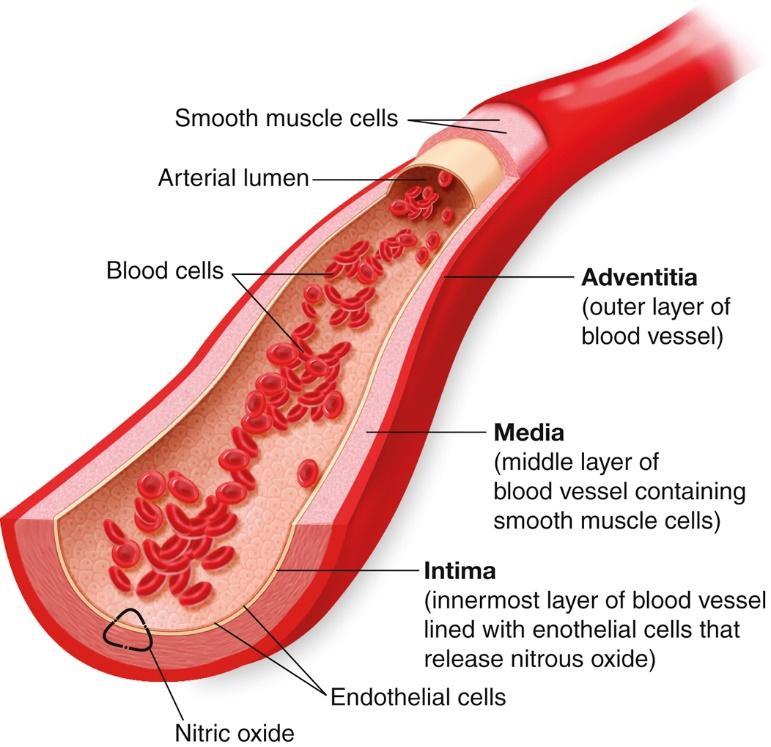
(Fig 1)
Components of an artery: The muscle cells in the media dilate and constrict in response to nitric oxide and angiotensin II, respectively. The kidneys make angiotensin II.
*
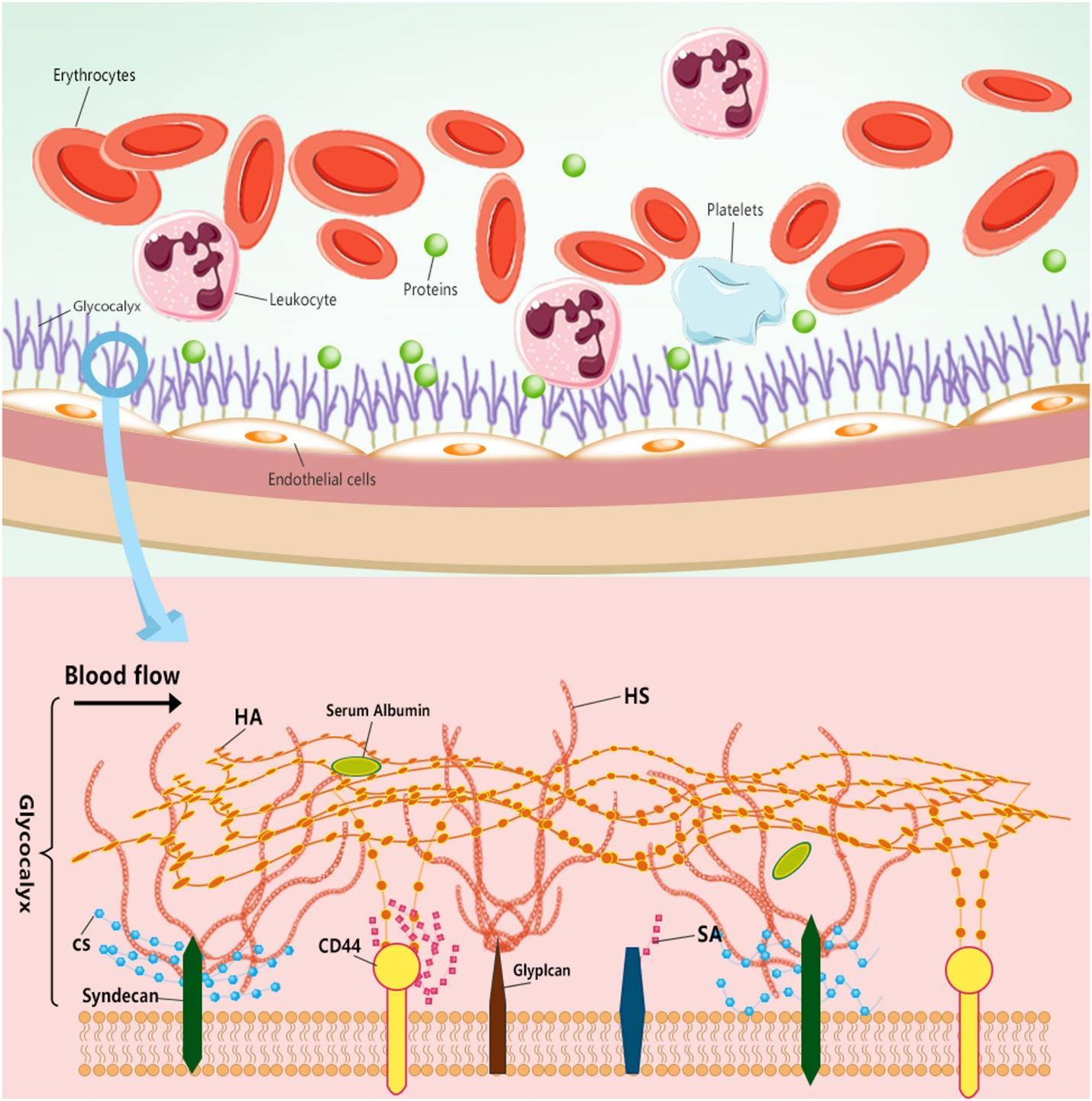
The Glycocalyx: Relatively new in the field of cardiology is the importance of the glycocalyx, (see Fig. 2). The glycocalyx protects the endothelium against an infinite number of insults. The function of the endothelium, the first layer of cells within the artery, is foundational to any discussion of hypertension. The endothelial cells are responsible for the production of nitric oxide and dilation of the artery allowing for good blood flow. A “broken” glycocalyx is the first step that leads to endothelial dysfunction. A damaged glycocalyx therefore can cause endothelial dysfunction which can result in elevated blood pressure.
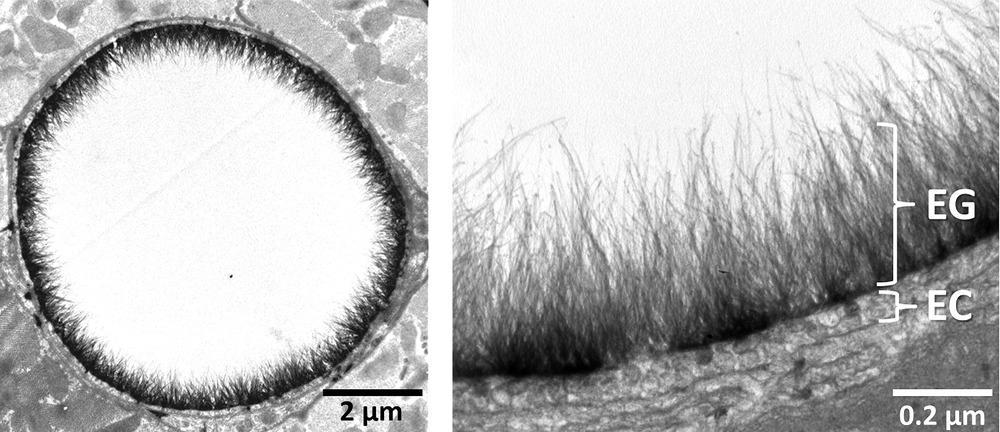
Fig. 2
The hair-like structures of the glycocalyx are attached to the endothelial cells (one cell layer thick!) They protect the artery wall from damage. Hypertension causes damage to this delicate layer. EG=endothelial glycocalyx, EC=endothelial cells.
(Fig. 2) Expanded visualization of the glycocalyx seen in purple below.. HS = Hyaluronan sulphate (from certain brown seaweed and in Arterosil) HA= Hyaluronic acid (best food source is bone broth). Not shown here is glucosamine sulphate, taken for cartilage health. It’s been shown to help regenerate the glycocalyx too.
Many factors control blood pressure, and the most critical is the balance between nitric oxide (NO) and angiotensin II. Angiotensin II causes vasoconstriction, hypertension, inflammation, oxidative stress, vascular immune dysfunction, thrombosis, and promotes the formation of arterial plaque.
The Role of Nitric Oxide (NO)
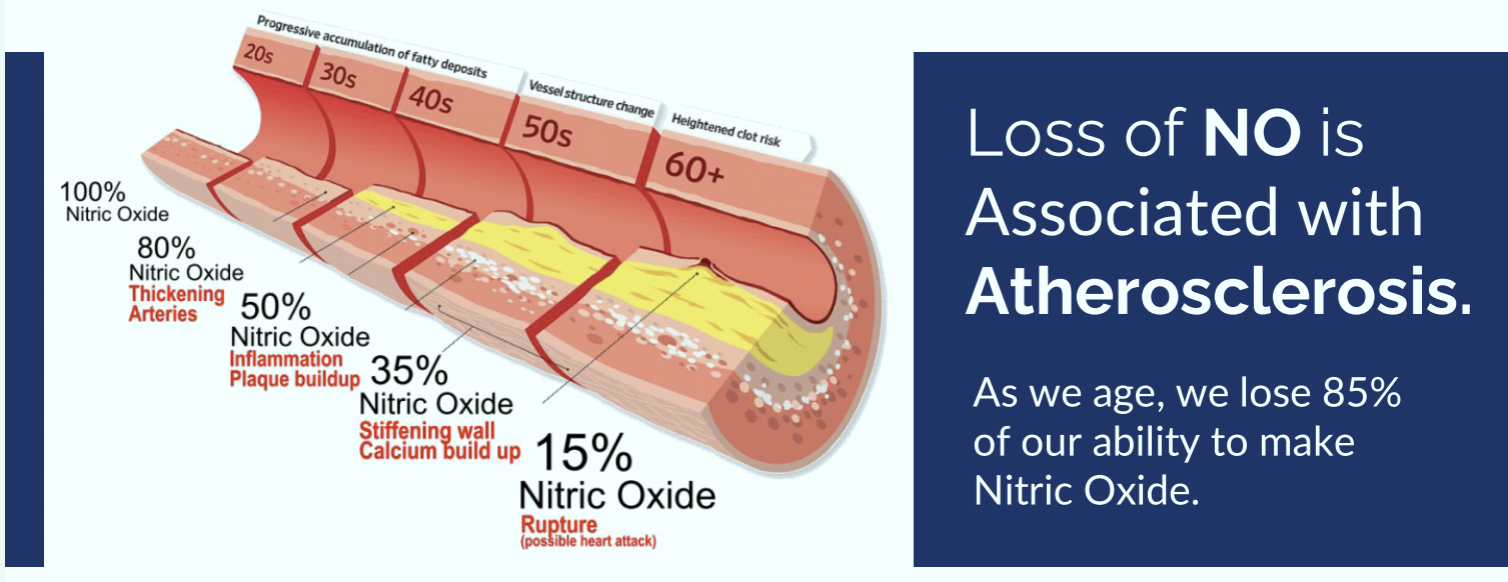
Loss of Nitric Oxide (NO) production and signaling is the leading cause of hypertension.2 Because hypertension is primarily responsible for structural changes in the vasculature that increase the risk of myocardial infarction (heart attack from a ruptured plaque) and stroke, a primary focus should be on normalizing blood pressure through the restoration of NO production.
Nitric Oxide production decreases with age. Endothelial cell dysfunction, coupled with reduced nitric oxide the process of vascular aging arterial stiffness and elevated blood pressure.
Nitric oxide has numerous beneficial effects, including:
Reducing arterial inflammation and oxidative stress
Vasodilation
Lowering systemic vascular resistance (SVR) and blood pressure
Decreasing atherosclerosis and congenital heart defects
Improving mitochondrial biogenesis
Inhibiting thrombosis, permeability, and abnormal growth of vascular tissue
NO production is primarily controlled by the endothelial cells, but activated muscles also release NO, allowing vasodilation and improved blood flow to working muscles. The effects of exercise largest impact on natural nitric oxide production. Even in an aging individual exercise will improve nitric oxide levels compared to sedentary people.
As we age, we must be careful about the balance between nitric oxide and angiotensin II. The modern lifestyle of poor sleep, lack of exercise, high stress, high salt, bad fats, processed foods, low fruit and vegetable intake, rushing, and lack of rest promotes an imbalance between nitric oxide and angiotensin II.
*
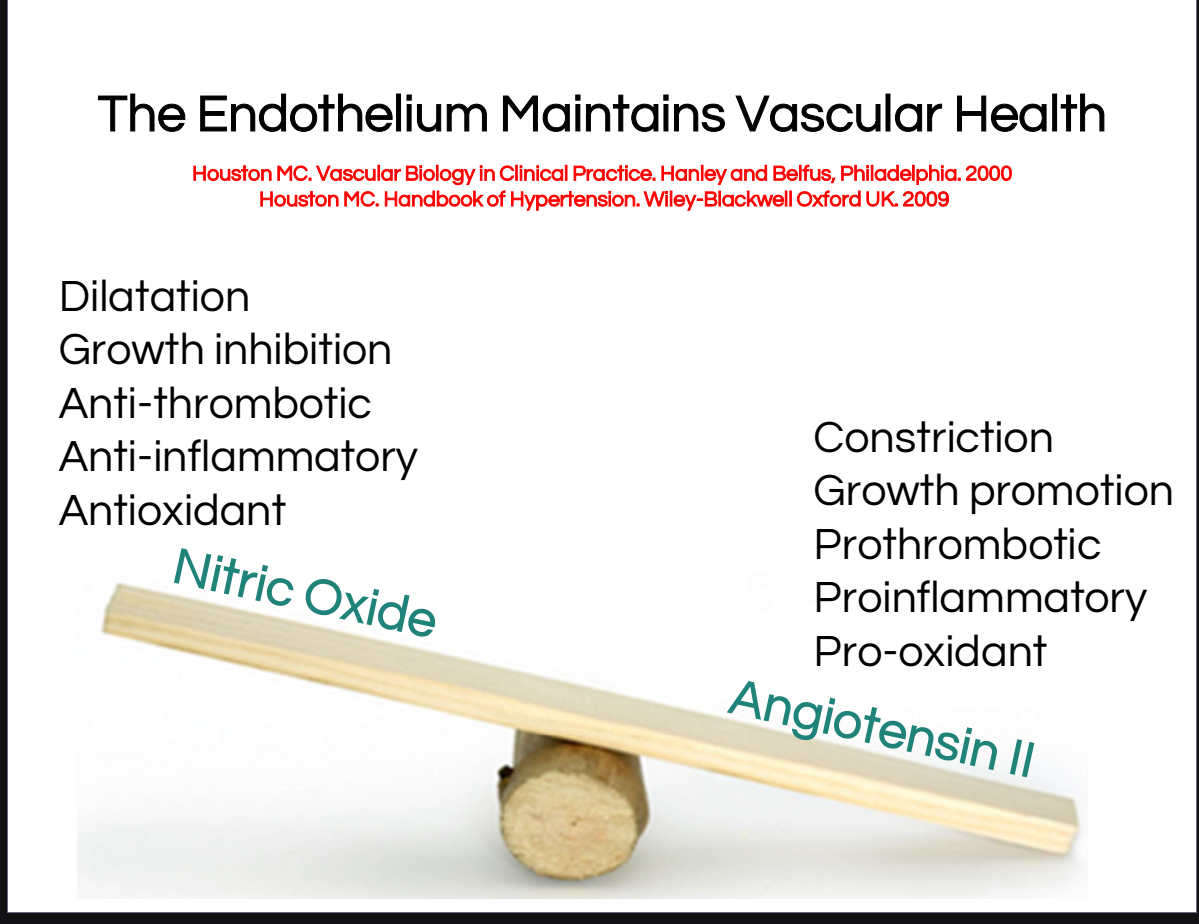
Hypertension is bidirectional, meaning that a diseased blood vessel can cause it, and hypertension alone can also cause a diseased blood vessel. All this is part of the vascular aging process and vascular dysfunction continuum. Increased blood pressure causes mechanical strain on the artery wall, thus disrupting the delicate balance. Also, the mechanisms that cause hypertension and the different molecules and chemicals produced cause direct damage to the artery wall as part of that process. These insults on the artery, cause oxidative stress and inflammation. Cholesterol particles enter into arteries to build plaque more quickly under these conditions. The endothelium is responsible for regulating the tone of the blood vessel. When there is endothelial dysfunction, hypertension can result.
Types of Testing
Kidney hormones:
Different hormone ratios of renin, aldosterone and angiotensin II. Cause three different types of hypertension. 3 This is measured so that treatment can be individualized.
Inflammation and oxidative stress measured through vibrant wellness or conventional labs revealed the state of inflammation and oxidative stress.
Micronutrient testing done through vibrant wellness measures antioxidants, vitamins, minerals and essential fatty acids.
Genetic testing: The CARDIAX test helps reveal genetic predispositions and actionable steps to personalize treatment.
Saliva nitric oxide test strips help determine optimal treatment by targeting certain levels.
Home blood pressure monitoring: This is critical, and I ask you to do it twice daily. Ideally, the pressure will always be below 120/80. There are two normal circadian rhythm peaks of blood pressure: one at around 10 in the morning and one at midafternoon. Blood pressure can be different depending on which arm is measured. Measure both. The one with higher pressure should be continuously monitored.
Max Pulse Testing (in office): this measures arterial aging, elasticity, the strength of the pulse and autonomic nervous system balance.
Hypertension Exercise Plan
Caloric expenditure is really just a side effect of exercise, inconsequential compared with the enormous release of hormones and other signaling substances that determine cell function. Short, intense activity like sprinting does not burn many calories but it triggers the release of anabolic hormones such as human growth hormone and testosterone. This hormonal mix elevates caloric consumption for hours and even days after exercise. Long-distance running does not elicit the same effect. Instead, it can lead to the production of a muscle loss hormonal mix that causes muscle wasting, inefficient metabolic processing, and physical decay. Higher-intensity exercise produces the most muscle signaling. The best exercise for longevity uses full body movements, incorporates great amounts of muscle (large muscle groups), and requires a combination of strength and endurance. Forcing the muscle to do a lot of work in a short amount of time results in powerful muscle-building, fat-burning, anti-inflammatory, and brain-stimulating effects. It also includes decreased blood pressure!
Exercise recommendations:
First, working with a physical trainer is highly recommended unless you are an expert. Second, training for endurance events/races is different, but please include strength! During the off-season, add more strength. Below is the standard recommendation.
Resistance Training—Weightlifting will encourage optimal muscle physiology and release of hormones, mediators, and interleukins. In brief, initially lift the heaviest weight possible 12 times to get the muscle burn, then decrease the weight with each subsequent set, but keep increasing the number of times the weight is lifted. This maximizes hormone stimulating effects that lead to the health benefits of exercise.
Aerobic Training in Intervals—The best technique is aerobic interval training, which consists of short periods ranging from 20 seconds to two minutes of “burst” aerobic training of varying intensities, depending on one’s present level of exercise conditioning. This more closely mimics the natural activities we evolved to perform and benefit from and strings together several periods of intense and semi-intense activity into a single, longer exercise period that still burns calories and builds endurance. If you are not experienced with this I recommend working with a trainer.
Aerobic or endurance exercise has the biggest impact on blood pressure. The basic prescription for this is a minimum of 30 minutes 5 days a week and a target of 1 hour 5 days a week or more. This should be primarily zone two with some intervals of approximately 20 seconds to 2 minutes.
Core Exercises—Exercises designed to improve abdominal and back strength while increasing flexibility. These exercises are essential for the core (abdomen and lower back), which is often neglected.
Water and Energy Shake—Drinking plenty of water while working out is vital. You must drink water before beginning to exercise, during exercise, and afterward. Your water should be of high quality and not from plastic containers, due to the risk of ingesting chemical compounds like polychlorinated biphenyls. In addition, about ten minutes after starting your workout, you might try consuming a homemade energy drink. The recipe below will provide Adenosine triphosphate (ATP) and energy as well as nutritional substrates to maximize exercise performance and increase muscle strength and performance as well as lean muscle mass. This recipe comes from my colleague Mark Houston, MD, the leading expert in the United States on preventive cardiology, hypertension and atherosclerosis.
4 to 6 ounces of fresh orange juice diluted with 12 ounces of water
One tablespoon of organic raw honey
20 g whey protein powder
6 g essential amino acids with HMB
2 g acetyl-L Carnitine
10 g d-ribose powder
2 g of glutamine powder
2 g buffered vitamin C
2 g taurine powder
2 g arginine powder (not if on NO booster already such as vasconox/NEO40 or over 60)
Cordyceps 3000 mg standardized (optional)
Rhodiola 300 mg standardized (optional)
Exercise in the Morning—Exercising in the morning after a 12 hour fast is good for numerous reasons. An empty stomach optimizes fat burning, increased muscle growth factors and the resulting increase in muscle strength, bulk, tone, and contour, as well as weight loss and improved energy level, focus, and concentration during the day.
Exercise on an Empty Stomach—Begin exercising on an empty stomach after a 12-hour fast, except for water and whey protein consumed about ten minutes before exercise and have nothing but more water and energy drink while exercising. This allows for the depletion of liver and muscle glycogen while generating maximal surges of growth hormone.
Benefits of exercise:
Reduces risk of myocardial infarction (MI), recurrent MI, angina, CHD arrhythmias, and recurrent MI.
Improves heart function, ejection fraction, cardiac output, coronary blood flow and reserve, oxygen consumption, aerobic capacity, Left ventricular (LV) ejection fraction (EF) and (LVEDV), and Congestive Heart Failure (CHF).
Lowers blood pressure (average reduction is 11/7.5 mm Hg with optimal training), reduces the risk of developing hypertension, decreases heart rate, improves heart rate variability and heart rate recovery time, lowers SVR, and increases eNOS and NO.
Reduces total cholesterol, VLDL, LDL-P, and Lp(a); triglycerides and LDL; increases HDL. Increases particle size and HDL functionality.
Reduces body weight and body fat and increases lean muscle mass.
Reduces clotting tendencies and blood viscosity.
Lowers blood sugar, decreases the the risk of diabetes, and improves insulin sensitivity.
Improves all abnormalities of metabolic syndrome.
Improves immune function and decreases infections.
Reduces risk of stroke.
Increases muscle mass and decreases sarcopenia (resistance exercise)
Improves memory and focus and reduces the risk of Alzheimer's disease and dementia.
Improves skin tone and elasticity and decreases wrinkles.
Improves depression, stress, anxiety, and overall psychological well-being.
Improves quality of life.
Improves sleep and sleep quality.
Reduces risk of certain cancers, such as colon, breast, and prostate.
Decreases risk of gallstones and peptic ulcer disease.
Increases telomerase and slows telomere attrition rate and aging.
Decreases sympathetic nervous system activity, cortisol, and catecholamines; increases parasympathetic activity.
Reduces inflammation.
Decreases fatigue.
Decreases osteoporosis.
Recommended Hypertension Diet
A Word on Sodium
The typical Western diet is much too high in sodium and way too low in potassium and magnesium. Sodium activates the sympathetic nervous system causing vasoconstriction. Whether refined salt or sea salt, sodium is still sodium. However, sea salt has other minerals, so the percentage of sodium per gram is lower. It is estimated that about 50% of patients with high blood pressure are salt sensitive, and 33% are salt resistant. Sodium can lower nitric oxide production, impair vasodilation, and increase vasoconstriction, which reduces blood flow to organs and tissues while increasing blood pressure.
Potassium and magnesium counteract the effects of sodium. Potassium intake should be about 5 g/day and sodium intake about 1.5 g/day. More potassium is better, up to even 10 g each day. 1000 mg of potassium in the diet can reduce all-cause mortality by 20%.
Magnesium intake should be at least 2000 mg a day. Magnesium supplements work well, especially when taken along with taurine, a low-sodium diet, and a high-potassium diet.
Anyone concerned about getting enough sodium because they sweat through exercise should get a sweat test the amount of sodium we lose in her sweat can vary greatly between individuals. One size fits all recommendations for sodium consumption during exercise should never be made.
Specific Foods
Tahini (sesame butter). The active ingredients in tahini (sesamin, sesamolin, sesaminol, sesamolinol, and sesamol) act as ACE inhibitors and can lower blood pressure, lower glucose, improve triglycerides, LDL levels, and are antioxidants.
Green tea, dried seaweed, pomegranate juice (four to six ounces recommended), raw nuts, and ground flaxseed are all good foods.
Foods that can act like blood pressure medicines and are classified accordingly. Food can be medicine, and medicine can be food! Print this out and buy these items at the grocery store. All organic if possible, please.
Angiotensin-converting enzyme inhibitors:
Tahini (sesame butter)
Garlic
Wakame seaweed
Sardine protein
hawthorn Berry
Bonito Fish (dried)
Casein
Whey Protein
Yogurt and Milk peptides
Extra virgin olive oil (EVOO)
Sake (optional)
Omega-3
Beta-blockers
Protein
Fiber
hawthorn berry
Celery
Direct vasodilators
Omega-3 fatty acids
MUFA (Omega 9 fats) such as avocados and nuts
Soy
Fiber
Garlic
Flavonoids from vegetables
Nitrates from leafy greens and beets
Calcium channel blockers
hawthorn berry
Celery
Omega-3 fatty acids
Garlic
Calcium
Angiotensin receptor blockers
Potassium from fruits and vegetables
Resveratrol from grape juice
Fiber
Garlic
Vitamin C from fruits and vegetables
Celery
Gamma-linolenic acid (GLA/DGLA)
EVOO
Soluble fiber, such as that found in oat bran, can lower blood pressure between 5-7 points.
High-quality protein (organic, low-fat, no pesticides or hormones) can lower blood pressure. Both animal and nonanimal sources can do this. The daily recommended intake of protein depends on many factors including age, lean body mass and activity level. Generally, most patients need between 1.5 and 2 g/kg a day. There are number of mechanisms whereby protein lowers blood pressure and include angiotensin-converting enzyme (ACE) inhibition, reduction of stress hormones, and diuretic activity. Whey protein is an excellent choice not only to increase protein levels but also because whey has unique proteins that act as an ACE inhibitor. Numerous human studies support this. Hydrolyzed whey protein is the most effective but all of them will work.
Extra virgin olive oil is effective at reducing blood pressure. The recommendation is about four tablespoons/day. Olive oil can increase plasma nitrates and nitrates which increase nitric oxide, improve endothelial function, decrease oxidized LDL in addition to blood pressure reductions.
Garlic is another food rich in the Mediterranean diet and is also excellent for blood pressure control. Studies on aged garlic show approximately 500 mg a day could lower blood pressure between five and ten points. Dietary garlic is also good but more challenging to use consistently than aged garlic capsules.
Wakame seaweed is the most popular edible seaweed in Japan has been compared to the ACE inhibitor captopril and shown to be just as effective at 3 g/day.
Vitamin C lowers blood pressure, and the higher the initial blood pressure, the better the response. A proper diet should naturally be high in vitamin C, but that requires a high intake of fruits and vegetables, so many of my patients take between one and three extra grams of vitamin C per day if they have a hard time eating this way.
Vitamin D deficiency can cause hypertension. Blood pressure reduction can be seen with treatment to achieve a blood level between approximately 80 and 100 according to the most recent data. Each 100 international units of vitamin D increases blood levels by about 1 ng/mL. About 5000 international units a day is the typical dose for most of my patients.
An analysis of 23 trials found that the polyphenols in chocolate reduce blood pressure by three to four points.
Digital Diet Tracking
To measure macronutrients such as protein, fat, carbohydrates and other nutrients, patients can use a smartphone app. Patients are asked to input their diet for about two weeks to gain insight.
Maintaining healthy blood pressure bullet points
Aerobic exercise minimum of 30 minutes per day or equivalent per week (3.5 hours). Ideally, 5 hours or more per week.
Follow my recommendations for increasing nitric oxide levels.
Lose fat. Losing weight as stored fat lowers blood pressure and reduces inflammation.
No more than two drinks of alcohol per week
High fiber diet consisting of low-sugar fruits, vegetables, raw unsalted nuts, seeds, and whole grains.
Stay hydrated. The urine color should be light yellow.
Be careful with salt . . . taste something before you add salt and be aware that there is usually much more sodium in restaurant meals.
Avoid High fructose corn syrup. It causes vasoconstriction endothelial dysfunction, increases sympathetic nervous system activity, and sensitizes sodium receptors, which increases sensitivity to sodium.
Eat high potassium foods
Intentional breathing for stress management
Meditation. Work up to a minimum of 20 minutes a day, more is better
Yoga. Attend yoga class one to three times a week.
Get a minimum of seven hours, preferably eight-plus hours of sleep every night
Try to go to bed at the same time and wake up at the same time
Set yourself up for success by establishing healthy circadian rhythms and good melatonin levels. Start your day by getting sunlight in your eyes by going outside.
About two hours before bedtime, start decreasing bright light in the house and stop working at the screen a minimum of one hour before bedtime so that melatonin is not suppressed. Blue light-blocking glasses can help.
Use heat and cold exposure to stress your body enough to make it stronger. This type of good stress, called hormetic stress, turns on genetic pathways that help with the response to life stressors. It’s the right amount of stress where your body is challenged, but you aren't overly fatigued
Take all my treatments, such as plant extracts, antioxidants, anti-inflammatory molecules, hormones, vitamins, and minerals as consistently as possible!
Track your blood pressure!